What Tempo Should a Worship Song Be, and Do You Need a Click?
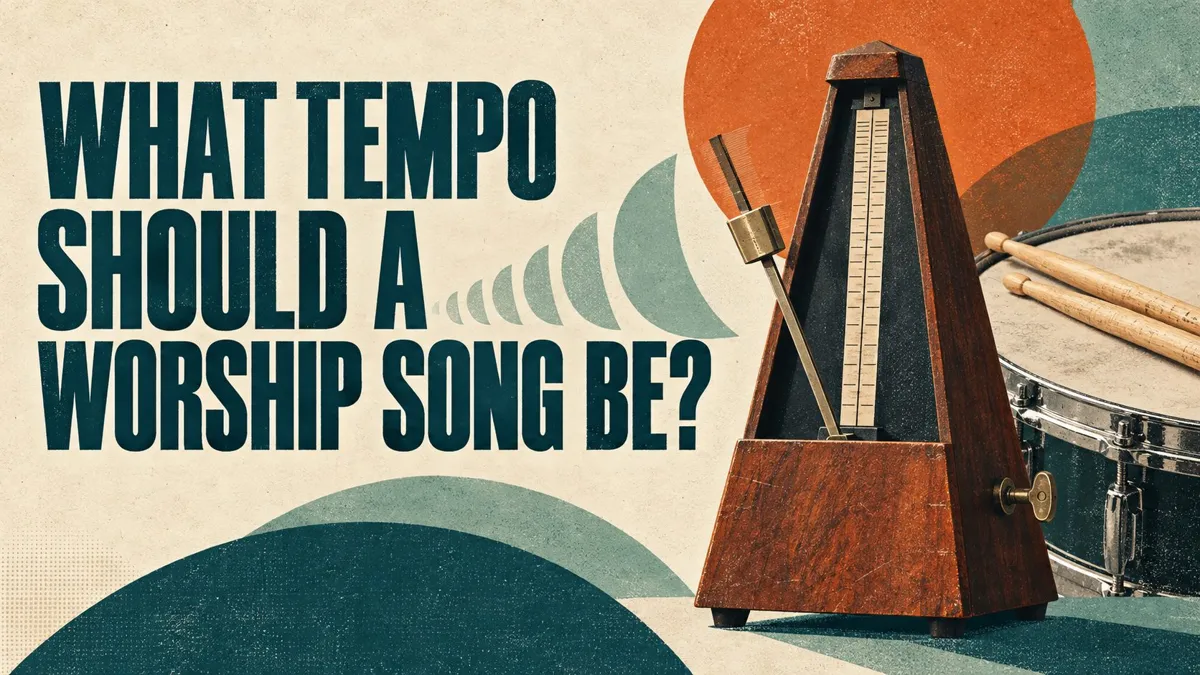
Start with the tempo of the original recording. If you don't know the number, tap it in by ear, then write it on the chart so the drummer has it before Sunday. From there, adjust slightly for the occasion: a prayer meeting or a contemplative gathering can sit slower than a youth night. On Sunday, most small bands don't need a click. Let the drummer, or whoever starts the song, hold the tempo in upbeat songs, and let the quieter songs breathe. Keep the metronome for rehearsal and recording.
And keep tempo in proportion. It's worth getting right, but there are plenty of things in worship that matter more.
This is written for volunteer worship leaders and bands at small churches, most of whom have never played to a click and aren't sure whether they should.
Start With the Original Recording
Most of the time we play a song at the same tempo as the recording we learned it from. The songwriter and producer have usually found a tempo where the words sit comfortably and the groove works, so it's a sensible place to begin.
If the chart doesn't list a tempo, find it by ear. Put the recording on and tap along on a metronome's tap-tempo button. After a few taps it works out the beats per minute (BPM). It doesn't need to be exact. Something that feels close to the record is enough.
As a rough guide, worship songs tend to fall into these ranges:
| Tempo | Typical feel |
|---|---|
| 60–80 BPM | Slow, reflective songs, ballads |
| 80–100 BPM | Mid-tempo |
| 100–120 BPM | Upbeat |
| 120+ BPM | Fast, high-energy |
Then write the number down: on the chart, in the song's notes, wherever your team looks. A tempo that lives only in the leader's head can't help the drummer. We covered sending keys, tempos and reference recordings ahead of rehearsal in an earlier post.
When Should You Play a Song Slower or Faster?
When the occasion calls for it, which is sometimes, not always. The same song can feel different at a youth service, in a prayer meeting, or at a quiet, contemplative gathering, and the mood of the whole time together might ask for it to sit a little slower or push a little harder. The change is usually slight. You're adjusting the song to fit the room, not rewriting it.
There's also the leader's own pace. Some leaders naturally sit a little behind the record. We're probably more laid back than many: we like to be able to taste the words we're singing, and a slightly slower tempo leaves room for that. That's a personal preference, not a rule, but it's a legitimate one. You're the one who has to sing it.
Your own time with God feeds into this too. When you play a song alone at home, you play it at your own pace, and sometimes that pace suits a song better than the record does. If it makes sense to bring that moment to a gathering, bring it.
What If the Band Isn't Locking In on a Song?
Try changing the tempo, or the subdivision. When a band isn't swinging together on a song, the problem is sometimes the tempo itself: a few BPM either way can make a groove fall into place. Other times the tempo is fine, but the band is feeling it differently. Changing the subdivision everyone plays to, for example straight eighths instead of a busier sixteenth pattern, can give the song a different feel and pull the band together.
Rehearsal is the place to try this, with a metronome running so you're all comparing the same thing.
Who Sets the Tempo on Sunday?
Whoever starts the song. Usually that's the drummer, or the instrument the song opens with, and sometimes the leader simply starts and the band falls in behind.
Once a song is going, the band leans on the drummer. In upbeat songs the tempo tends to stay put, because the drummer holds it steady, sometimes with a metronome open beside them to check against. Quieter songs, and especially prayer songs, are more fluid. They can lift and settle with what's happening in the room and in the set, usually within a sensible range.
No drummer? Then whoever starts the song owns the tempo. We wrote more about leading worship without a full band, where that's the normal situation rather than a problem.
Does a Worship Band Need a Click Track?
Not necessarily, and many small bands are better off without one on a Sunday.
A click keeps a band perfectly steady, but it changes what everyone is listening to. Instead of following each other, the song and the room, everybody follows the click. That's exactly what a quiet or prayerful song needs to be free of. The organic moments, when a song slows into prayer or swells because the room is responding, are something a click can't do.
There's one clear exception. If you play along to backing tracks, you need a click, because the track won't follow you.
Where a Metronome Earns Its Place
Mostly in recording and rehearsal, where steadiness matters more than flexibility.
When recording, a metronome keeps everyone playing on the same beat. A recording needs to be tight, but not so tight it sounds robotic: you can get a computer to align every note perfectly, and it usually sounds strange. The metronome gives you something to lean on, especially when players can't hear each other, when one instrument has to start alone, or when you're putting down a guide track for the others to play to.
In rehearsal, it helps the band agree on how fast a song should go, and gives you a fixed reference while you practise a part or try out a different tempo.
And for the drummer, a metronome open on a stand during the service with the sound off can be a quiet visual check that the tempo hasn't drifted.
Keeping the Tempo on the Song
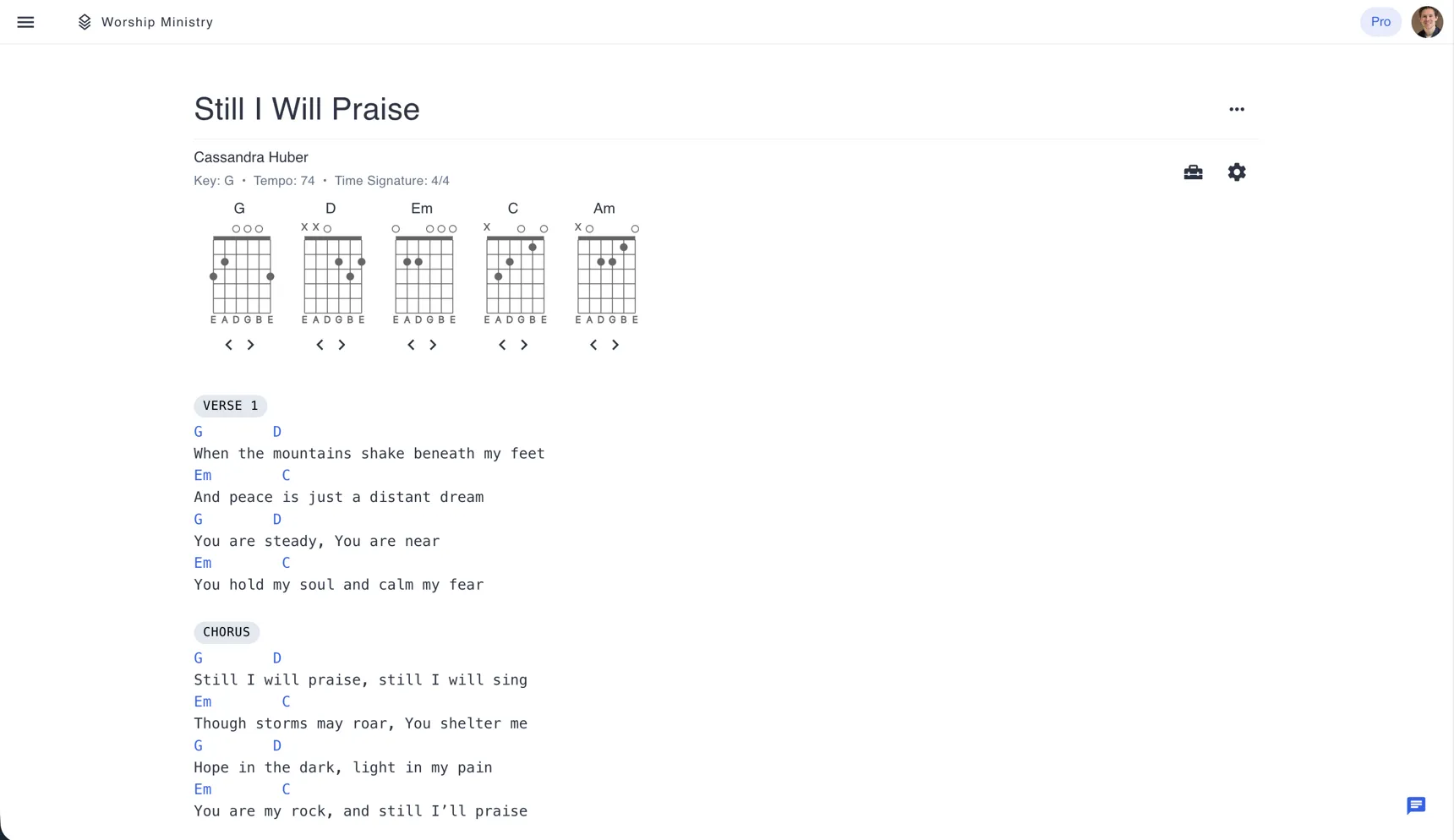
In Song7, the tempo and time signature are part of each song, alongside the key. Open the metronome over a song and it loads that tempo automatically. Move to the next song in the set and it follows. If you don't know a song's tempo yet, tap it in by ear on the metronome, then add it to the song's details so it's there for the drummer next time. The same metronome is also free to use in your browser, no account needed.
Key Takeaways
| Point | Details |
|---|---|
| Start from the original | Use the recording's tempo, found by tap tempo if you don't have the number. |
| Write the tempo on the chart | The drummer, or whoever starts the song, needs the number before Sunday. |
| Adjust for the occasion | A prayer meeting or contemplative gathering can sit slower than a youth night. |
| The band leans on the drummer | Upbeat songs stay steady; quieter songs can breathe within a sensible range. |
| Save the click for recording and tracks | On a Sunday, a click makes everyone follow it instead of each other and the room. |
| Keep it in proportion | Tempo is worth getting right, but plenty in worship matters more. |
Frequently Asked Questions
Tempo Is One Thing Among Many
If you take one thing from this, make it the simple version: listen to the original, write down the tempo, and practise. That covers most of what a volunteer band needs.
Then hold it loosely. A song played a little too slow or a little too fast rarely gets in the way of a congregation meeting God. The things that matter more, like a team that loves each other, songs people can sing, and a leader who is actually worshipping, won't show up on a metronome.
Related reading: What key should a worship song be in?